
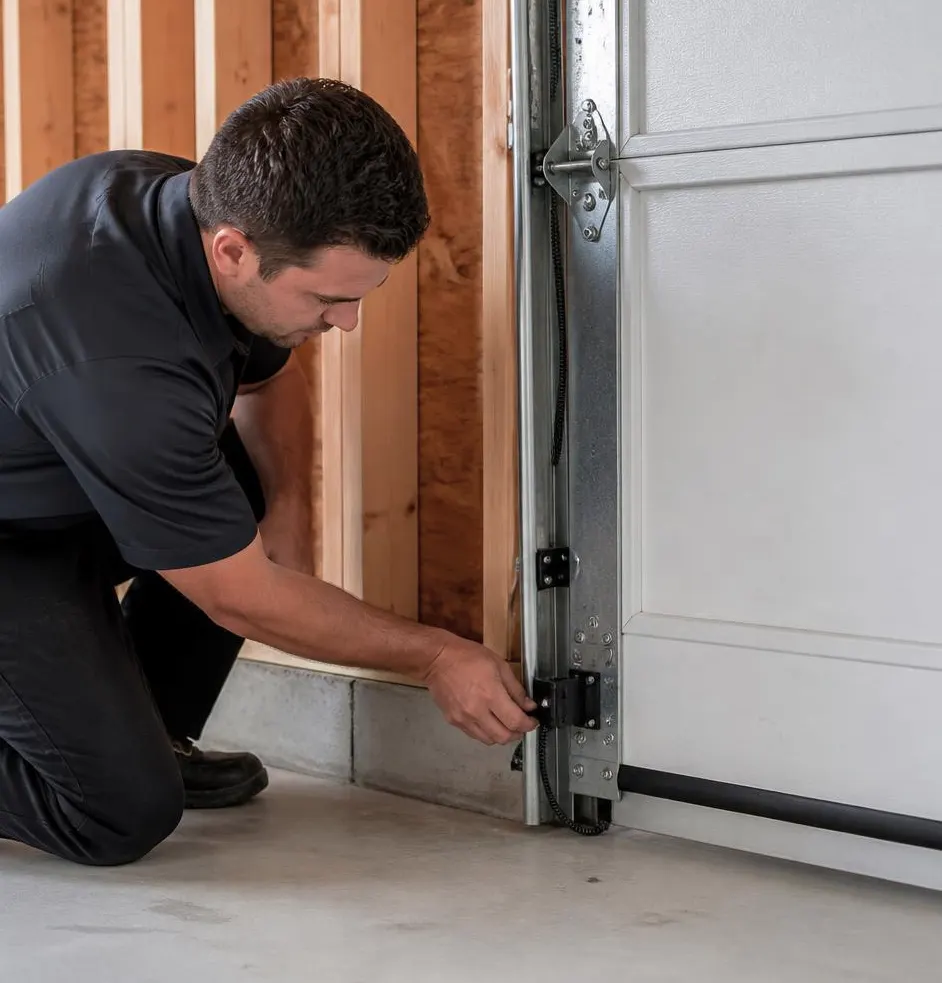
A technician pulls into a driveway in Marysville on a damp October morning to look at a door that won't close right. The bottom panel is swollen and soft where rain has been wicking up from the slab for a few winters. The homeowner wants it fixed. After a look, the answer is the same one that comes up a lot this time of year: the door can be patched for a while, but it's close to the end of its life, and a straight repair quote isn't going to answer the real question. The real question is, what does a new one actually cost?
What a New Garage Door Actually Costs
These are national ranges for materials and professional installation, not a local quote. Your price will land somewhere in these bands depending on size, material, and options.
- Basic steel, single layer, single car: roughly $700–$1,400 installed. No insulation, plain panel design, standard hardware.
- Mid-grade insulated steel, single car: roughly $1,200–$2,500 installed. Foam core, better weatherstripping, sometimes a few small windows.
- Insulated steel or composite, double car: roughly $1,800–$3,500 installed.
- Wood-look steel or composite carriage style: roughly $2,500–$4,500 installed. Carriage hardware and faux wood grain without real wood upkeep.
- Custom real wood carriage house doors: roughly $4,000–$10,000+ installed, depending on wood species, panel design, and glass.
Double-wide and oversized doors, custom widths, and heavier insulation packages push toward the top of each range or above it.
Factors That Actually Move the Price
Within any one material category, a few things swing the number more than people expect:
- Size and number of panels. A double-wide door costs more than two singles would separately, but less than most homeowners guess, since labor is similar.
- Insulation level. R-value matters more if the garage is attached, finished, or used as a workshop. Uninsulated doors are cheaper but transmit cold and condensation.
- Windows and hardware. Decorative glass inserts, faux strap hinges, and handles are mostly cosmetic cost adders, not structural ones.
- Opener. If the opener is being replaced at the same time, that's a separate line item, typically a few hundred dollars for a basic chain-drive unit up to higher for a quiet belt-drive with battery backup.
- Removal and disposal of the old door. Rotted wood doors in particular can be heavier and messier to haul away than steel.
- Track, frame, and jamb condition. If the old tracks are bent or the wood framing around the opening has started to rot, that repair gets added before the new door goes in.
Why Material Choice Matters More Here Than in Drier Climates
Months of rain and damp air change the math on material choice. Painted wood looks great on day one, but in a climate with persistent moisture and the kind of moss and mildew that grows on anything that stays wet, wood needs regular refinishing to avoid soft spots and rot at the bottom panel, which is exactly where the damage usually starts. Steel and composite doors with factory-baked finishes shrug off that moisture without the upkeep. If you want the carriage-house look without the wood maintenance, steel or composite with a wood-grain overlay is worth pricing against real wood before you commit.
Insulation is also worth a second look heading into the wetter, colder months. Mild Pacific Northwest temperatures mean you don't need a furnace-grade R-value, but an insulated door cuts down on condensation on the inside of the panel, which is what eventually leads to rust at the hinges and rot where the door meets a wood jamb.
Repair or Replace?
Not every rough-looking door needs full replacement. Surface rust, a dented panel, or a worn weatherstrip are repair jobs. Replacement starts to make financial sense when you see soft or delaminating wood at the bottom panel, rust that's eaten through steel rather than just sitting on the surface, a door that's visibly out of square, or panels warped enough that they no longer seal against wind-driven rain.
When to Call Marysville Garage Door
If you're staring at a door that's rotted, rusted through, or just outdated and want an honest read on repair versus replacement, that's a call for Garage Door Installation. A technician will check the opening, the track, and the framing, give you real options and ranges based on what's actually there, and install the new door correctly the first time. If the door itself is fine but it's due for a tune-up before the wet season settles in, ask about Garage Door Maintenance instead, which catches small issues like worn rollers or failing weatherstripping before they turn into a bigger repair.
Call Marysville Garage Door for a straight answer on your door, whether you're in Marysville, Arlington, Lake Stevens, or anywhere nearby in Snohomish County.